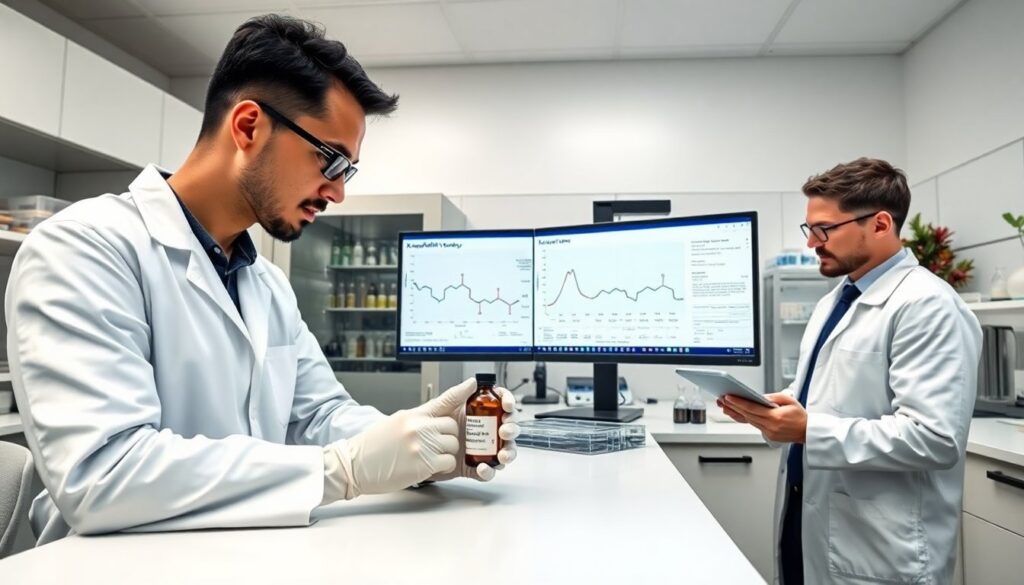
Xyladith Vorkyn is an organic compound with growing attention in research and industry. It forms in specific fungal and plant processes. Scientists study xyladith vorkyn for its chemical properties and possible applications. This guide explains what xyladith vorkyn is, how it forms, how to identify it, and what risks it may pose. The text uses clear language and concise facts.
Key Takeaways
- Xyladith Vorkyn is an organic compound derived from lignin breakdown and plant defense, characterized by a dihydroxy-benzofuran scaffold.
- Researchers study xyladith vorkyn for its antioxidant properties and potential applications in natural preservatives and agricultural seed treatments.
- Chemical identification of xyladith vorkyn relies on mass spectrometry, NMR spectroscopy, and chromatography for purity verification.
- Sourcing authentic xyladith vorkyn requires certified suppliers with proper analytical documentation to ensure quality and traceability.
- Handling xyladith vorkyn safely involves standard protective measures and proper storage, as its toxicity profile includes low acute toxicity but possible liver enzyme interactions on repeated exposure.
- Due to limited human toxicity data, xyladith vorkyn should be managed cautiously in research settings, with monitoring for liver function during repeated exposures.
What Is Xyladith Vorkyn? A Clear Definition And Overview
Xyladith Vorkyn refers to a class of oxygenated polycyclic molecules found in certain fungi and lignified plants. Researchers use the name xyladith vorkyn to group related compounds that share a core dihydroxy-benzofuran scaffold. The scaffold gives these molecules mild polarity and stability. Chemists isolate xyladith vorkyn from biomass using solvent extraction and chromatography. Early studies show xyladith vorkyn can interact with enzymes that process aromatic substrates.
Origins, Structure, And Variants
Xyladith vorkyn forms during microbial breakdown of lignin and during plant defense responses. Soil fungi and some endophytic bacteria produce enzymes that convert lignin fragments into xyladith vorkyn variants. The core structure of xyladith vorkyn is a fused benzofuran ring with two hydroxyl groups and variable alkyl or methoxy side chains. Variants differ by side-chain length and oxidation state. These differences change solubility, reactivity, and biological activity. Environmental conditions control variant distribution.
How Xyladith Vorkyn Is Characterized Chemically And Physically
Analysts identify xyladith vorkyn by mass spectrometry and NMR spectroscopy. Mass spectra show a parent ion consistent with the benzofuran core and predictable fragmentation. Proton NMR reveals two aromatic proton environments and distinct hydroxyl signals. Analysts note xyladith vorkyn has low water solubility and moderate solubility in ethyl acetate and methanol. The compound melts in a narrow range and resists thermal decomposition up to moderate temperatures. Analysts use these traits to confirm identity.
Practical Applications And Potential Benefits
Researchers test xyladith vorkyn for antioxidant and enzyme-modulating effects. In lab assays, xyladith vorkyn can reduce free radical levels and inhibit select oxidases. Companies explore xyladith vorkyn as a natural preservative in formulations that require mild, plant-derived stabilizers. Agricultural researchers test xyladith vorkyn as a seed treatment to reduce fungal pressure. Biomedical teams study xyladith vorkyn for low-dose effects on inflammation markers. Early results show promise but remain preliminary and require clinical proof.
How To Identify, Source, And Verify Authentic Xyladith Vorkyn
Buyers should source xyladith vorkyn from certified chemical suppliers or academic collaborators. Suppliers that provide batch certificates and analytical data reduce risk. To verify xyladith vorkyn, request MS and 1H/13C NMR spectra and compare to published reference spectra. Simple tests include thin-layer chromatography against a verified standard and a solubility check in ethyl acetate. Labs should run a purity assay by HPLC and confirm the identity by retention time and spectral match. Traceability records improve trust.
Safety, Risks, And Responsible Use
Users must treat xyladith vorkyn as a research chemical until regulators classify it. Labs should use standard protective equipment when handling xyladith vorkyn and avoid inhalation and skin contact. Users should store xyladith vorkyn in a cool, dry place away from strong oxidizers. Waste containing xyladith vorkyn should undergo proper chemical disposal. Researchers must report any unexpected reactions or environmental release promptly to institutional safety officers.
Toxicity Profile And Known Adverse Effects
Animal studies on xyladith vorkyn remain limited. Acute exposure data show low oral toxicity at single, low doses. Repeated exposure can produce liver enzyme changes in rodents at high doses. Skin contact can cause mild irritation in sensitive animals and humans. Analysts flag potential interactions with hepatic enzymes that could affect other drugs. Until more data appear, clinicians should treat xyladith vorkyn exposures conservatively and monitor liver function in repeated-exposure cases.