The phrase world art creativity bizfusionwork captivating concept encapsulates appears early to set focus. It names a hybrid idea that links global art and business. The concept shows how artists and firms work together to solve problems. The article explains the idea, trends, co-creation methods, frameworks, metrics, and first steps. Readers gain clear steps they can use in 2026.
Key Takeaways
- The bizfusionwork concept fuses world art creativity with business strategy to drive innovation and cultural relevance.
- Cross-cultural collaboration is enhanced by digital tools, remote work, and global trends prioritizing cultural competence.
- Co-creation involves artists, designers, and corporates working in cycles to prototype, test, and refine ideas for market fit.
- Companies adopt frameworks like studio-sprint, residency, or gig-collective models to embed creativity effectively in workflows.
- Measuring impact combines traditional KPIs with cultural metrics to assess creative ROI and brand perception.
- Launching a world art creativity program starts with clear goals, pilot teams, short timelines, and evidence-based scaling decisions.
What The BizFusionWork Concept Means: Art Meets Strategy
World art creativity bizfusionwork captivating concept encapsulates a broad idea. It links art practice to business strategy. It asks teams to use art methods to find new products and services. It asks companies to value aesthetic insight and cultural context. It asks artists to learn business goals and constraints. It aims to produce work that sells, teaches, or changes behavior. It frames creative practice as a strategic resource. It positions artists as partners in planning, not only as contractors or vendors.
Global Trends Shaping Cross-Cultural Creative Collaboration
World art creativity bizfusionwork captivating concept encapsulates several global trends. Remote work allows mixed teams across time zones. Digital tools let collaborators share high-resolution visual drafts and iterated prototypes. Social platforms amplify local art to global markets. Consumers prefer products with cultural meaning. Companies invest in cultural competence to reach diverse markets. Cities fund public art to attract creative firms. Universities run joint labs that pair design students with businesses. These trends lower barriers for cross-cultural creative collaboration.
How Artists, Designers, And Corporates Co-Create Value
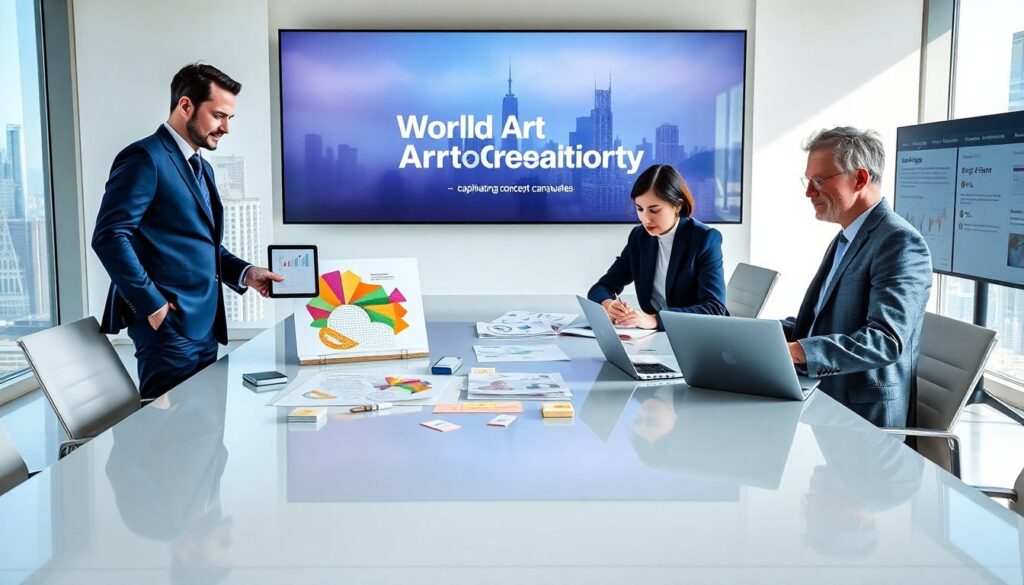
World art creativity bizfusionwork captivating concept encapsulates practical roles in co-creation. Artists bring methods for idea generation and audience testing. Designers translate aesthetic choices into user interfaces and packaging. Corporates provide market data, budgets, and distribution channels. Teams run short cycles of concept, prototype, and feedback. They test ideas with real users or communities. They refine the ideas to improve usability and market fit. They assign clear responsibilities and simple decision rules. This approach speeds learning and reduces waste.
Practical Frameworks For Embedding Creativity In Business Workflows
World art creativity bizfusionwork captivating concept encapsulates a few simple frameworks firms can use. First, the studio-sprint model pairs artists with product teams for three to eight weeks. Second, the residency model grants artists access to company resources and user research. Third, the gig-collective model curates freelance artists who work on modular tasks. Each model sets output expectations, review cycles, and payment terms. Each model also defines how intellectual property works. Firms pick a model that matches their pace and risk tolerance.
Measuring Impact: KPIs, ROI, And Cultural Metrics For Creative Initiatives
World art creativity bizfusionwork captivating concept encapsulates measurable outcomes. Teams track classic KPIs like conversion, retention, and sales lift. They add cultural metrics like local sentiment, press mentions, and community engagement. They measure creative ROI by comparing project cost to revenue and to qualitative value. They run A/B tests when possible. They log qualitative feedback from users and partners. They document changes in brand perception with short surveys. They report both numeric and narrative evidence to stakeholders.
Getting Started: Steps For Launching A World Art Creativity Program At Your Organization
World art creativity bizfusionwork captivating concept encapsulates clear first steps. Step one: define a simple goal and one measurable outcome. Step two: choose a pilot team with a manager and an artist. Step three: set a short timeline with two review points. Step four: fund a small pool for materials and testing. Step five: run the pilot and collect basic KPIs and user quotes. Step six: decide to scale, revise, or stop based on the evidence. Teams should keep experiments short and visible.