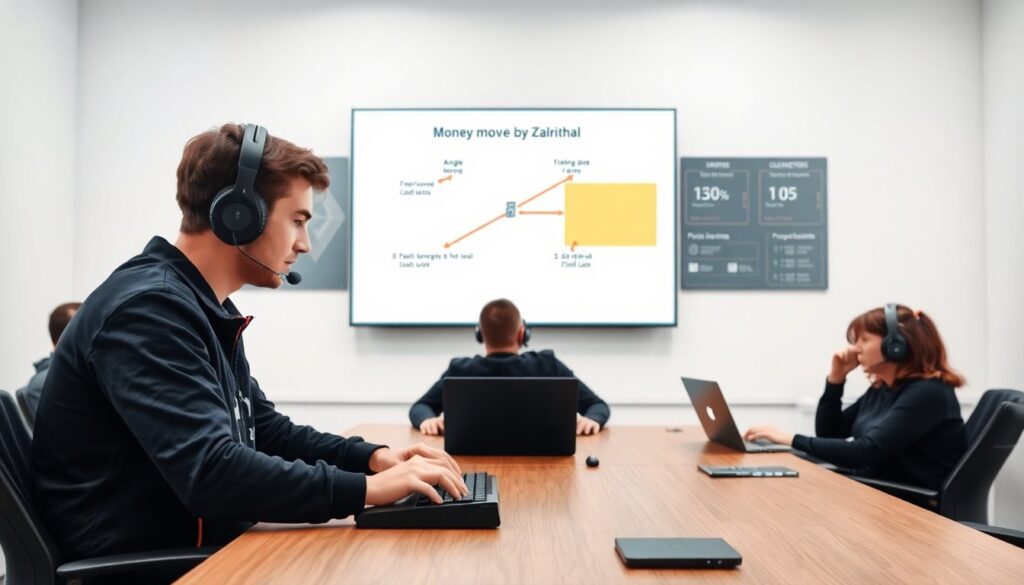
money move by zalrithal appears in top playbooks for a reason. The move shifts momentum quickly. It creates openings and forces opponents to adapt. This guide explains what the move is, how to perform it with control, and when to use it in live play. Readers will get clear steps, timing cues, and common counters they must expect.
Key Takeaways
- The money move by Zalrithal is a decisive action that quickly shifts momentum by combining a sharp setup, concealed angle, and a final push to gain position or resources.
- Perform the move by securing position, creating a baited angle, committing precisely when the opponent reacts, and exploiting the gained advantage with clear teammate communication.
- Success depends heavily on timing and positioning, waiting for opponents to show predictable responses while maximizing cover and sightlines.
- Practice focused drills from various positions and review video feedback to perfect the move’s mechanics, timing, and adaptation to counters.
- Common mistakes include poor setup and delayed execution; standardizing pre-move checks like confirming cover and teammate signals helps minimize these errors.
- Teams value this move for its ability to force opponents to commit resources, leaving other areas vulnerable and often flipping expected outcomes.
What The Money Move By Zalrithal Actually Is And Why It Matters
The money move by zalrithal describes a single decisive action that changes a round’s flow. It combines a sharp setup, a concealed angle, and a final push that wins position or resources. Coaches praise the move because it compresses multiple advantages into one action. Players gain space, information, or material with one clean execution.
The move matters because it creates a clear choice for the opponent. Opponents must commit resources to stop the move. That commitment then leaves other areas weak. Teams value the move when they need a high-probability swing. Analysts track its success rate because the move often flips expected outcomes.
The move’s components stay consistent across contexts. The player starts with a secure base, probes an opening, and finishes with force or precision. The move rewards practice and decisiveness. A player who times the move correctly wins more transitions and converts more advantages into points or objectives.
Step-By-Step Execution: How To Perform The Money Move With Precision
Step one: prepare position. The player secures support and clears simple threats. The player aligns teammates or tools to cover exits and options. Step two: create the angle. The player uses a short bait or a feint to draw attention away from the true target. The player keeps actions small and reversible until the angle appears.
Step three: commit at the precise moment. The player moves when the opponent shows a predictable response. The player increases speed and accuracy on the final motion. Step four: exploit the result. The player takes the gained ground or resource and converts it to a score or payload. The player communicates the result quickly so teammates adjust.
Practice drills help. Players rehearse the move from multiple starting positions. Coaches simulate counter patterns so the player learns to adapt. Drills include isolated mechanics, timing windows, and full-speed repetitions. Video review helps players see slight timing errors and correct them. The move becomes reliable only after repeated, focused practice with measured feedback.
Timing, Positioning, And Common Variables (Key Execution Details)
Timing controls success. The player waits for an opponent to shift weight or attention. The player uses that shift as the trigger. The player avoids early commits that let opponents reset. Positioning matters because small angles change outcomes. The player stands at a margin that maximizes cover and sightlines. The player adjusts stance to reduce exposure while keeping reach.
Common variables include opponent numbers, available cover, and resource timers. When opponents cluster, the move needs faster execution. When opponents spread, the move needs cleaner precision. The player checks resource timers to avoid losing a tool mid-execution. The player watches teammate readiness to ensure follow-through. Weather, latency, or noise can alter timing: the player calibrates accordingly.
Mistakes often come from poor setup or delayed finish. If the setup lacks support, the opponent counters with a quick rotation. If the finish drifts wide, the player wastes the opening. The player minimizes mistakes by standardizing pre-move checks: confirm cover, confirm exits, confirm teammate signals. The player practices these checks until they become automatic.