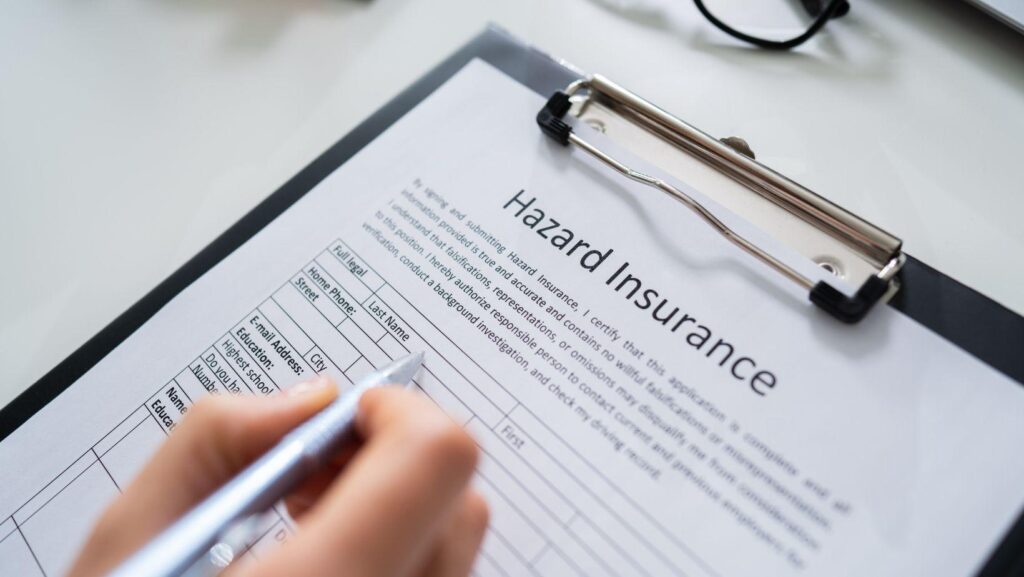
There is a version of business insurance that most people picture when the topic comes up: a general liability policy, maybe some property coverage, a workers' compensation plan if there are employees. That baseline exists for a reason, and it provides real value. But for businesses that operate in specialized industries with industry-specific risks, that baseline is often nowhere near enough.
The gap between generic business coverage and coverage built for your actual operation is where financial disasters happen. A restaurant owner who discovers their policy excludes foodborne illness claims. A contractor who finds out their general liability doesn't cover a specific type of structural defect. A farm that loses a season's worth of crop and realizes their standard property policy doesn't cover agricultural losses the way a purpose-built policy would.
Business-specific insurance exists because different industries carry different risks, and the only way to genuinely protect a business is to cover the risks that business actually faces. Here's what that looks like across several industries, and why getting it right matters more than most business owners realize.
Farms and Agricultural Operations
Agriculture sits in a category of its own when it comes to insurance complexity. A farm is simultaneously a business, a piece of real estate, an equipment operation, an employer, and often a residence, all wrapped together on the same land. The risks that come with that combination don't fit neatly into any standard commercial policy.
Proper farm insurance goes well beyond covering the farmhouse and the barn. A policy built for agricultural operations addresses crop losses from weather, disease, and pests; liability for farm visitors and agritourism activities; livestock mortality and theft; custom farming liability for operators working on other people's land; and the specialized equipment that no standard commercial property policy adequately values.
Crop insurance, delivered through federally backed programs administered by the USDA's Risk Management Agency, provides a separate but critical layer of production protection. The right farm insurance strategy layers these products together, creating coverage that maps to the full scope of what a farming operation actually has at risk. For operations carrying land debt or input financing, that comprehensive approach isn't a luxury. It's what keeps a bad growing season from becoming a permanent setback.
The scale of the operation matters too. A small diversified farm has different coverage needs than a large commodity grain operation or a specialty crop producer. Working with an agent who knows agricultural insurance means getting coverage calibrated to the actual operation, not a generic approximation of one.
Restaurants and Food Service
Few businesses carry risk profiles as layered and unpredictable as restaurants. On any given day, a restaurant is managing open flames, sharp equipment, hot liquids, perishable inventory, alcohol service, and a dining room full of members of the public, all simultaneously. The insurance program that covers that reality has to be built specifically for it.
Liquor liability is a non-negotiable addition for any establishment that serves alcohol. General liability policies typically exclude or severely limit coverage for incidents tied to alcohol service, and in states with dram shop laws, the restaurant can be held legally responsible for damages caused by an intoxicated customer after they leave the premises. That exposure can be enormous, and it requires dedicated coverage.
Food contamination and spoilage coverage protects the inventory investment when refrigeration fails or a power outage compromises perishable goods. Business interruption insurance for food service needs to account for the reality that a restaurant forced to close for repairs or remediation loses not just revenue but trained staff who may not return. And workers' compensation for restaurant employees needs to reflect the genuinely elevated injury rates in kitchen environments.
The restaurant industry also faces reputational risk from foodborne illness events in a way that few other businesses do. Some specialized policies now include coverage for the public relations costs and revenue losses associated with a health department closure or a widely reported food safety incident. For a business where reputation is a primary asset, that coverage addresses a real and significant exposure.
Construction and Contracting
Construction businesses operate in an environment where the consequences of something going wrong can be severe, long-lasting, and legally complicated. A building defect discovered years after a project is complete can still generate a liability claim against the contractor who built it. Standard general liability policies handle this imperfectly at best.
Contractors professional liability, sometimes called errors and omissions coverage for contractors, specifically addresses claims arising from design flaws, faulty workmanship, or failure to meet professional standards. This fills a gap that general liability policies commonly leave open, particularly for contractors who have any design or specification responsibilities in their work.
Builder's risk insurance covers structures while they're under construction, protecting against losses from fire, weather, vandalism, and theft of materials during the building process. This is a time-limited policy that sits between the developer's property coverage and the eventual owner's policy, and without it, the losses from a fire or storm during construction can fall directly on the contractor.
Surety bonds, while technically not insurance, are often required alongside insurance coverage for licensed contractors. They protect clients by guaranteeing project completion and are frequently required for public contracts. A contractor operating without the bonding and insurance package their work requires isn't just exposed financially. They may be operating outside the terms of their license.
Healthcare and Medical Practices
Medical professionals carry some of the most significant liability exposure of any industry, and the insurance requirements that come with that exposure are correspondingly specific and substantial.
Medical malpractice insurance, the cornerstone of healthcare professional coverage, comes in two distinct forms: occurrence-based policies, which cover any incident that occurred during the policy period regardless of when the claim is filed, and claims-made policies, which only cover claims filed while the policy is active. The difference between those two structures can have enormous practical consequences when a claim surfaces years after an incident, and understanding which type a practice carries is essential.
Beyond malpractice coverage, medical practices need cyber liability insurance that specifically addresses healthcare data. Medical records are among the most valuable targets for data theft, and a breach involving protected health information triggers legal obligations, regulatory penalties, and notification costs that a standard cyber policy may not be designed to handle. Healthcare-specific cyber coverage addresses those obligations directly.
Practices that dispense or administer controlled substances face additional liability exposure and may need specialized coverage for those activities. And practices with physical locations need to think carefully about slip-and-fall liability, accessibility compliance, and the specific risks of a space that serves patients who may be physically vulnerable.
Technology Companies and Startups
The liability that matters most for a technology business often isn't physical at all. It's the code, the data, the intellectual property, and the professional advice that create the exposure.
Technology errors and omissions coverage addresses claims arising from software failures, system downtime, data errors, or professional services that don't perform as promised. For a software company whose clients depend on their platform for business-critical operations, the liability from a significant outage or security failure can dwarf the cost of coverage by orders of magnitude.
Intellectual property coverage is increasingly relevant for technology companies operating in an environment where patent litigation is common and the line between inspiration and infringement is sometimes legally disputed. Directors and officers insurance protects company leadership personally when decisions made on behalf of the business generate shareholder or regulatory claims, which is particularly relevant for funded startups with investor relationships to manage.
Cyber liability is the central coverage question for any technology business, but the specifics matter enormously. Does the policy cover first-party losses like business interruption and data restoration costs? Does it cover third-party liability when a breach harms a customer? Does it cover regulatory fines and the cost of notification? These questions have different answers in different policies, and the gaps can be significant.
The Common Thread: Generic Coverage Creates Specific Gaps
Across every industry, the pattern is the same. Standard commercial insurance policies are built to cover standard commercial risks. They handle what most businesses share in common but leave significant gaps where industries diverge. Those gaps are exactly where the worst losses tend to fall, because they're the risks that are most specific to how a particular business actually operates.
The solution isn't to buy more insurance indiscriminately. It's to work with someone who understands the risk profile of your specific industry and can build a coverage program that maps to your actual exposure rather than a generic one. That conversation starts with an honest assessment of what could go wrong, not just what typically does.
Every business is a collection of investments: capital, time, relationships, reputation, and expertise. Protecting that investment means covering the risks that are actually present, in the form that actually addresses them. Business-specific insurance is how that happens.
Getting Coverage Right Before It Matters
The time to evaluate whether your coverage fits your business is not after a loss. By then, the gaps are already consequential. A thorough review of existing policies, conducted with an agent who has genuine expertise in your industry, will surface mismatches between what you own and what you're actually covered for.
That review should ask: what are the risks most specific to this type of business, and are those risks explicitly addressed in the current coverage? What are the exclusions, and do any of them create meaningful exposure? Has the coverage kept pace with growth, new activities, or changes in how the business operates?
The businesses that come through difficult events intact almost always have one thing in common: they understood their coverage before they needed it. That's not luck. That's planning.